Vacuum Desensitization: Ideal Session Length for Pets
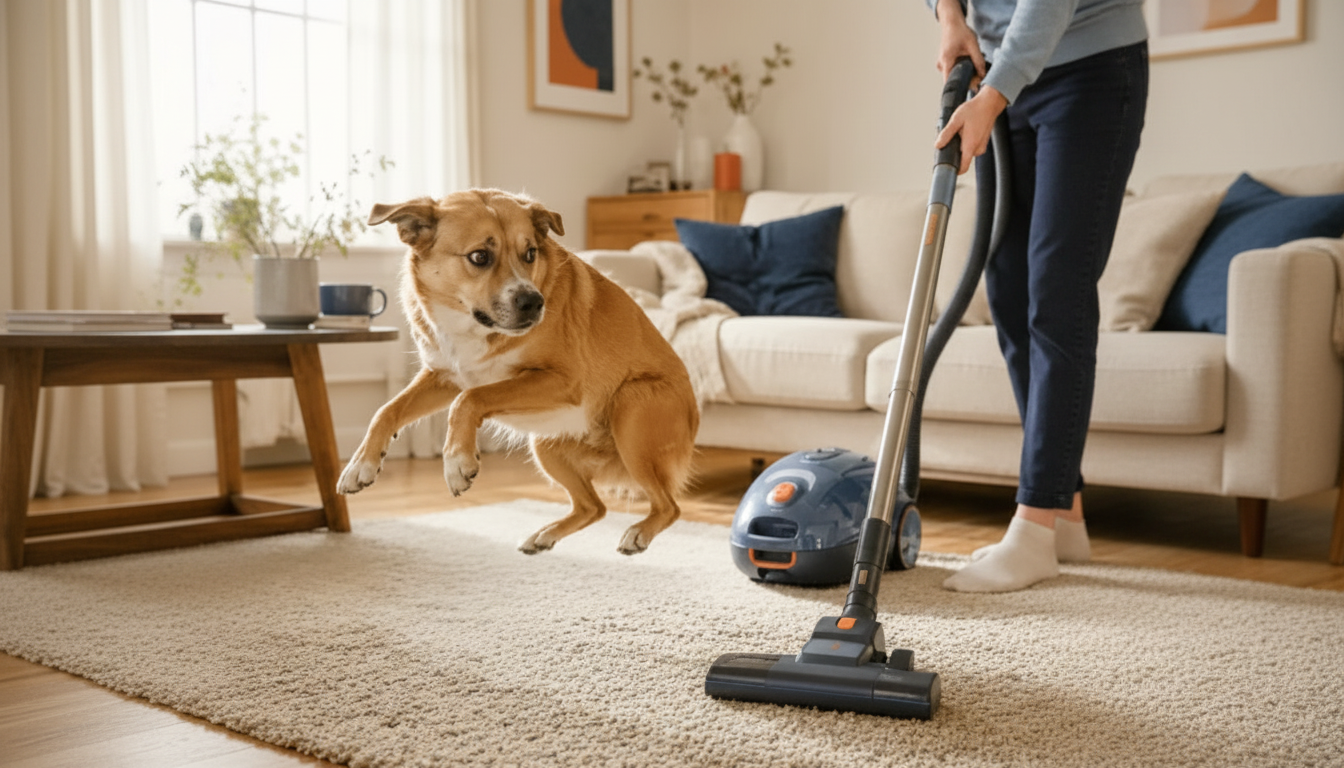
How long should vacuum desensitization training sessions be for pets?
Vacuum desensitization training works best in short, low-pressure sessions that end before your pet gets overwhelmed. For most pets, aim for 1–5 minutes per session at the beginning, then gradually build up to 5–10 minutes as your pet relaxes and starts predicting good things (treats, play, praise) when the vacuum appears. Multiple short sessions spaced throughout the day are usually more effective than a single long session.
Start short and stop early
If your pet is nervous, even 30–60 seconds can be plenty. The goal is to finish while your pet is still comfortable—not to “push through” fear. A good rule: end the session after a small win (calm body, taking treats, choosing to stay in the room) and take a break.
Watch behavior, not the clock
Use your pet’s signals to decide session length. If you see lip licking, yawning, trembling, stiff posture, tucked tail, pinned ears, frantic barking, hiding, or refusal to take treats, the session is too long or too intense. Shorten the next session and increase distance from the vacuum or lower the intensity (vacuum off, then on in another room, then closer over time).
How often to practice
Try 1–3 sessions per day, especially during the early stages. Consistency matters more than duration. If daily practice isn’t possible, a few sessions per week can still help—just keep steps smaller and progress slower.
Build duration gradually
Once your pet can stay loose and engaged, add time in small increments—about 30–60 seconds at a time. You can also increase difficulty one variable at a time: distance, sound level, movement, or the vacuum being turned on. If you change two things at once and your pet regresses, back up to the last easy step.
For a step-by-step approach and troubleshooting tips, visit the full guide on vacuum desensitization training session length for pets.
FAQ
What should I do if my pet barks or hides as soon as the vacuum comes out?
Go back to an easier step: keep the vacuum out but far away and reward calm behavior, then slowly reduce distance over multiple short sessions. If your pet won’t take treats or can’t settle, increase distance and end the session sooner.










Leave a comment